Focus stability
Operators monitor focus condition, nozzle alignment, and lens cleanliness before quality drift becomes scrap.
Amada laser technology is built around keeping the process stable after installation, not only the headline cut speed at acceptance. The focus is source behavior, beam delivery, nozzle management, software handoff, automation timing, and field diagnostics. Buyers evaluating Amada laser systems need to know how the machine holds quality across shifts, how operators recognize drift before scrap appears, and how supervisors interpret production data when output, quality, and maintenance compete for attention.
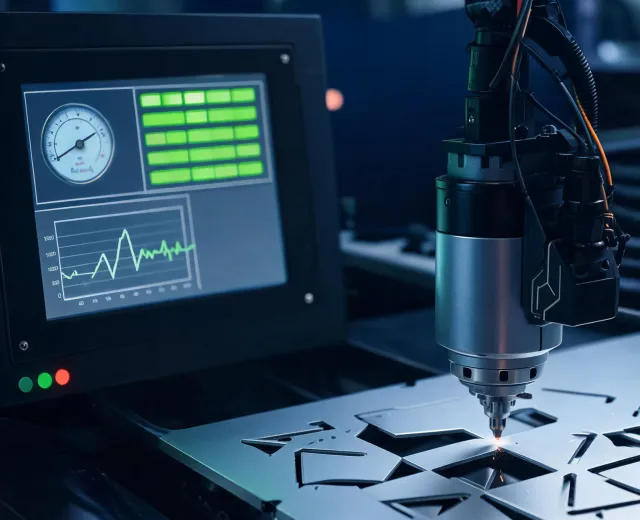
Operators monitor focus condition, nozzle alignment, and lens cleanliness before quality drift becomes scrap.
Pressure, purity, and consumption assumptions are reviewed by thickness group instead of averaged across all jobs.
Cut path, pierce count, and remnant strategy provide a clearer picture of throughput than headline speed claims.
Pallet exchange, loader queue, and part removal are measured against real staff coverage and downstream capacity.
These document types frame the questions a plant manager, manufacturing engineer, and purchasing group usually need to answer before narrowing a laser platform.
Compare material mix, thickness bands, gas strategy, and power assumptions before locking a model range.
Estimate how pallet exchange, tower capacity, and sorting workload affect unattended cutting hours.
Define test parts, edge criteria, operator signoff, and process data before commissioning begins.
Document part families, materials, production hours, quality expectations, and existing constraints before comparing machines.
Use sample parts and operating data to check beam behavior, cutting time, gas use, and operator intervention frequency.
Review how programs, nests, work orders, loading, and part removal will be coordinated in the target cell.
Agree on preventive records, spare consumables, diagnostic access, and escalation procedures before production ramp-up.
Send the operating assumptions behind your project and receive a structured response focused on source selection, automation flow, and service readiness.