Capture the part mix
The review starts with representative drawings, material grades, sheet sizes, expected tolerance, and the daily schedule pressure that drives queue decisions.
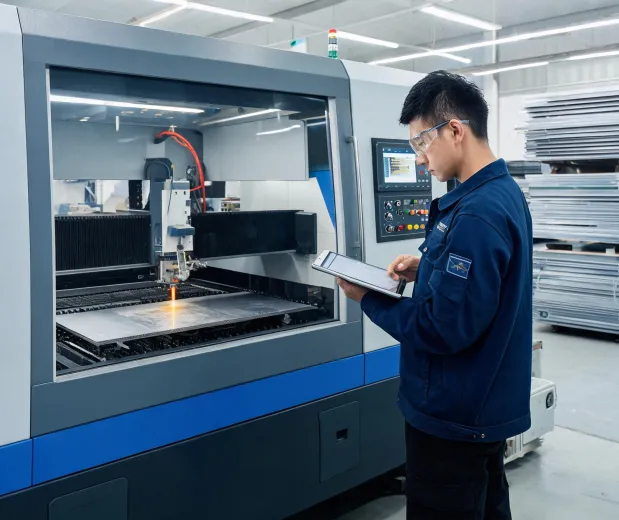
Capital equipment only performs when the application study, installation plan, operator training, and service rhythm are built around the shop floor. Amada service work begins with measurable operating assumptions: material type, tolerance bands, shift pattern, assist gas demand, fixture approach, network access, and the downstream bottlenecks that often decide whether a laser cell earns its keep. This page outlines the technical service structure used to evaluate a laser program before a purchasing team commits to bed size, source power, automation, or software integration.
| Service area | Engineering scope | Output for the buyer |
|---|---|---|
| Application study | Material families, thickness spread, nest density, edge quality targets, and rework history are mapped before model selection. | A practical machine range, source-power recommendation, and documented assumptions for cycle planning. |
| Automation planning | Loader timing, pallet exchange, tower capacity, and part removal are checked against staffed and unattended operating windows. | A layout concept that avoids moving the bottleneck from cutting to sorting, bending, or packing. |
| Installation readiness | Power, exhaust, assist gas, floor condition, clearance, network handoff, and safety zones are reviewed with the facilities team. | A commissioning checklist that reduces last-minute utility work and keeps acceptance testing focused. |
| Operator enablement | Programmers and operators learn nozzle care, lens inspection, pierce parameter logic, nesting review, and alarm escalation. | A repeatable operating routine for supervisors who need consistent output across shifts. |
The review starts with representative drawings, material grades, sheet sizes, expected tolerance, and the daily schedule pressure that drives queue decisions.
Engineers compare pierce strategy, gas use, thermal behavior, and edge condition so the purchase discussion does not rely on brochure speed alone.
Loader, tower, extraction, scrap handling, and programming workflow are treated as one production cell instead of separate accessories.
Before production ramp-up, the team agrees on measurable trial parts, operator signoff, preventive tasks, and escalation contacts.
A concise request with material, thickness, target output, and automation expectations is enough to start a meaningful engineering conversation.